

Rachel Wharton is a writer covering kitchen appliances. She used 72 bags of popcorn to find the best microwave (and set the office on fire only once).
A slide-in range — designed to fit flush in between cabinets and countertops — used to be something of a splurge. Today, front-control ranges with finished sides provide a similar look to traditional slide-ins, but they can fit almost anywhere in your kitchen. Plus, they typically cost a lot less.
Our top pick for a front-control range is the radiant-electric GE GRS600AV, which has a strong combination of cooking performance, value, and good looks.
If you want a front-control range with an induction cooktop, we recommend the GE Profile PHS930, which has the most intuitive digital cooktop control panel we’ve tested.
We also recommend several other excellent ranges, including a stove with advanced baking and roasting modes, a true slide-in model, and a range with a double oven.
Most of these are available with either a radiant-electric or an induction cooktop. Our research shows that induction is better than radiant-electric and gas cooktops in nearly every way — faster, cooler, more responsive, safer, and easier to clean. But for now, induction models are typically more expensive.
Everything we recommend
Best for...
Same range, induction cooktop
Frigidaire Gallery GCFI3060
Was$1500$1200 from The Home DepotPrice reflected in cart


What to consider
- Element size
If you frequently use extra-wide pots, a cooktop element larger than 8 inches in diameter comes in handy.
- Worthy upgrades
A convection oven bakes and roasts more evenly or in less time; an induction cooktop is better overall than radiant electric.
- Service reach
Before you buy, determine if your community has service technicians that will be able to repair your range if problems arise.
- Longevity
Extra features and functions add convenience and delight, but our research shows simpler appliances can last longer.
Top pick
This sturdy, powerful, front-control stove has a robust five-element radiant-electric cooktop and basic convection at a good price. It’s made by a dependable brand, and it comes in four finishes.
The radiant-electric GE GRS600AV has a broad array of useful features and a decent price. It has an attractive, uncomplicated style and comes in four finishes — the most of our picks.
This model’s five-element, glass-ceramic cooktop includes two larger elements: an extra-wide, 12-inch burner (ideal for oversize pots) and a 9-inch element. Both are at the front of the cooktop, have a power-boil setting, and are flex-width, meaning they can accommodate cookware of different sizes.
The GRS600AV has a basic convection mode (it has a fan to move air, but no extra heating element), which means it should bake and roast more evenly and quickly than a standard oven, plus no-preheat and air-fry modes.
The bottom of the oven cavity is removable and dishwasher-safe, which can help make cleaning up spills easier. This range has a steam self-cleaning mode but no high-heat mode.
The GRS600AV is a smart range. We have recommended ranges from GE Appliances since we began reviewing stoves in 2018, in part for the company's strong national service and support network.
Upgrade pick
This elegant and powerful front-control range has an induction cooktop and true convection, intuitive digital controls, and many useful features. But it’s more expensive than nearly all our picks.
The attractive GE Profile PHS930 is loaded with features, and its induction cooktop has the most intuitive and flexible digital controls that we’ve tested. It comes in one finish.
The cooktop has five elements, including a large 11-inch power burner, two medium elements that you can bridge for use with a griddle, and a low-power warming element. It has 19 power settings (nearly twice that of most other induction cooktops we tested).
The PHS930 has a true convection oven (it has an extra heating element by its fan), which allows for faster, more-even baking and roasting. The oven also has no-preheat and air-fry modes.
This range has both high-heat and steam-cleaning modes. It is a smart range.
Best for...
This handsome front-control radiant-electric range has a true convection oven with advanced features and a cooktop bridge for a dual-element griddle. But its largest cooktop element is on the smaller side.
This handsome front-control induction range has a true convection oven with advanced features and a cooktop bridge for a dual-element griddle
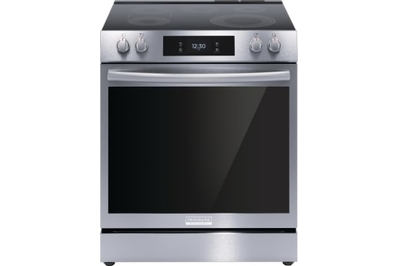
If you spend a lot of time baking, roasting, and braising, the Frigidaire Gallery GCFE3060BF is an affordable option with advanced features. It looks great, too, and is available in two finishes.
The GCFE3060BF has a true convection oven with an extra heating element by the fan, which allows for faster, more-even baking and roasting. It has no-preheat and air-fry modes, and settings for steam-baking and roasting and slow-and-low cooking.
This model also comes with a plug-in temperature probe, which can monitor the internal temperature of cooking foods and turn off the oven when a target temp is reached. It has steam and high-heat self-cleaning modes.
The five-element radiant-electric cooktop supports a dual-element griddle, and the glass-ceramic surface extends flush from edge to edge for an extra-streamlined look. Its largest, strongest element is not quite as wide as that of our top pick, but it’s a little more powerful and ideal for all but extra-wide pots and pans.
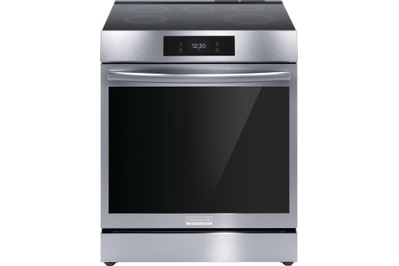
We also recommend the Frigidaire Gallery GCFI3060BF, the same range with a five-element induction cooktop.
Best for...
This true slide-in range has heavier-duty hardware and a sleeker design than the rest of our picks. It has a solid cooktop and true convection but few bells and whistles.
This true slide-in induction range has heavier-duty hardware and a sleeker design than a front-control range.
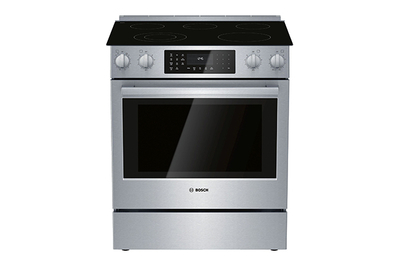
The radiant-electric Bosch 800 Series HEI8056U is a sleek true slide-in range that will sit flush against the wall and cabinetry. Its glass-ceramic cooktop overlaps countertops slightly, which looks nicer and prevents crumbs and spills from falling into the cracks. Its heavier-duty materials and hardware give it a luxury look. It comes in one finish.
The features on this stove are not quite as robust as those of other ranges we recommend, given its price (but that might not matter). This model has a five-element cooktop, including a low-power warming element. Its largest, strongest element is not quite as wide as that of our top pick, though it should be fine for all but extra-wide pots and pans.
The 800 Series HEI8056U’s oven has the smallest capacity (4.6 cubic feet) of all our picks, though it should be ample for most meals. It has a high-heat self-cleaning mode. It is not a smart range.
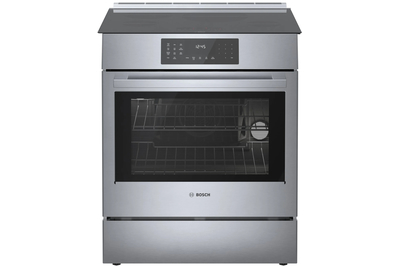
We also recommend the Bosch 800 Series HII8057U, the same range with a four-element induction cooktop.
Best for...
This double-oven range has one of the largest lower ovens we’ve seen in this category and an extra-powerful, flexible cooktop. But it doesn’t have a storage drawer, and you have to stoop to access the lower oven.
The radiant-electric GE Profile PS960YPFS is a front-control double-oven range with both an impressive five-element cooktop and larger lower oven. It’s well-designed and comes in one finish.
This model has the strongest power burner (3,600 watts) of any radiant-electric range we considered, which should bring water to a boil and skillets to searing hot faster than our other picks. The largest element is flexible, accommodating three pot sizes instead of two. You can also sync its two medium-size elements for use with a griddle.
Its 4.4-cubic-foot lower convection oven is bigger than those of most double-oven models available (it should fit a 23-pound turkey). Its smaller, standard top oven fits one rack. You do, however, give up a lower storage drawer with this style — and you need to stoop to reach the lower oven.
The PS960YPFS is smart and can sync with a GE Appliances range hood so that the lights and the ventilation fan come on when you begin cooking.
The research
Our picks at a glance
| GE GRS600AV | GE Profile PHS930 | Frigidaire Gallery GCFE3060BF | Bosch 800 Series HEI8056U | GE Profile PS960YPFS | |
| Cooktop type | radiant-electric smoothtop | induction smoothtop | radiant-electric smoothtop | radiant-electric smoothtop | radiant-electric smoothtop |
| Number of elements | five | five | five | five | five |
| Largest burner | 12 inches; 3,100 watts | 11 inches; 3,700 watts | 9 inches; 3,200 watts | 9.5 inches; 3,200 watts | 12 inches; 3,600 watts |
| Oven type | basic convection | true convention | true convection | true convection | true convection |
| Oven capacity (in cubic feet) | 5.3 | 5.3 | 6.2 | 4.6 | 6.6 (4.4 lower; 2.2 top) |
| Self-cleaning mode | steam | steam, high-heat | steam, high-heat | high-heat | steam |
| Smart | yes | yes | no | no | yes |
| Energy Star certification | yes | no | no | no | no |
| Number of finishes | four | one | two | one | one |
| Induction version | no | n/a | yes (Frigidaire Gallery GCFI3060BF) | yes (Bosch 800 Series HII8057U) | no |
Why you should trust us
I cover large kitchen appliances for Wirecutter and have nearly 20 years of experience writing about food and cooking. I’ve written guides to induction cooktops and portable induction cooktops, and I also offer advice on how to make the most of large kitchen appliances (including how to clean an oven).
We’ve been evaluating electric ranges since 2018. For this guide, we did the following:
- We interviewed a variety of experts, including repair technicians, appliance-store owners and staff, chefs, home cooks, appliance engineers, and kitchen designers.
- To get a feel for the quality of our picks, we visited appliance trade shows and dozens of big-box stores and appliance showrooms.
- We evaluated hundreds of owner reviews and reader comments to identify reliability problems or real-world quirks.
- We tested induction cooktops in our test kitchen in Long Island City, New York, to get a sense of their performance and ease of use.
Like all Wirecutter journalists, I review and test products with complete editorial independence. I’m never made aware of any business implications of my editorial recommendations. Read more about our editorial standards.
Who this is for
This guide focuses on 30-inch-wide electric slide-in ranges, with either radiant-electric or induction cooktops. These ranges have front-mounted controls and no backguard, and they require a 240-volt electric outlet.
This category includes two distinctly different styles: front-control ranges and true slide-in ranges.


Most slide-in ranges (and the majority of our picks) are front-control ranges, which are less expensive than true slide-in ranges. Front-control ranges have finished sides and don’t need to be installed between cabinets (though most are).
Increasingly, front-control ranges cost just a few hundred dollars more than similar freestanding ranges, so they are worth considering if you want a cleaner look in your kitchen. (Though, some people prefer having knobs toward the rear of the range, which is only possible on a freestanding range.)
If you’re upgrading from a freestanding range, a front-control range will be easier to slot into the existing space without any modifications. (As with any appliance, the exact dimensions of each range vary — be sure to read the specifications listed in the manual.)
True slide-in ranges usually have a nicer design than front-control ranges and look as though they’re built flush into your countertops. They also have more upscale hardware. Because they do not have finished sides, they must be installed between cabinetry. (We recommend one true slide-in.)
If you’re renovating your kitchen with a true slide-in in mind, it’s ideal to pick whichever model you want and check the exact dimensions and specifications before your contractor or designer starts building your cabinetry.
The ranges covered in this guide cost from $800 (often a sale price) to just over $4,000. Anything above this price would be considered a high-end range, which tends to have an even heavier-duty build and components, such as better-quality metal finishes, larger knobs, or rolling racks in the oven.
If you’re considering all your options, we also have guides to induction cooktops, slide-in gas ranges, freestanding electric ranges, freestanding gas ranges, high-end ranges, wall ovens, and portable induction cooktops.
How we picked
After years of research (and cooking), we determined these features are the most important to consider when you’re investing in a new electric range:
Cooktop


- A durable, well-designed cooktop: Found on all but the most affordable cooktops, glass ceramic is more attractive than exposed-coil elements (which are rare on front-control and true slide-in ranges). It heats more evenly and, according to scientists researching indoor air quality at Stanford University, it releases fewer volatile organic compounds into the air as you cook. Though it can scratch or chip if you, say, drag a heavy pot across it, significant cracks are rare (most owners with major cracks told us a dropped bottle of olive oil stored above their range was the culprit). Radiant-electric cooktops heat via a hot coil that is often hidden under this smooth glass-ceramic surface. Induction elements work via electromagnetic induction, which produces heat in the pan itself instead of on the cooktop. Radiant versions can be harder to clean if you don’t wipe away spills each time you cook, as food heats up on the surface and becomes hard to remove — this is not an issue with an induction cooktop.
- Elements in a range of sizes: Every stove should include a large, powerful element, ideally at least 8 inches in diameter. Many are even larger, which is recommended if you frequently use pans with bottom diameters of 10 or 12 inches. For radiant-electric cooktops, we also look for a medium-size, lower-power simmer burner (typically 1,200 watts), which is good for holding a larger pot at a medium or low temperature. Mid to higher-end radiant-electric ranges often include a fifth, low-heat element for tasks like melting butter or keeping a finished dish warm. Induction elements automatically adjust to fit smaller pots and can easily hold low temperatures, so a fifth warming element is less important.
- Power-boil settings or a powerful large element: These ranges usually have a large element with a highest setting of at least 3,000 watts, which is sometimes accessed via a boost or power-boil setting. More power means less time waiting for pasta water to boil or for a skillet to get hot enough to sear.
- Flex zones and bridges: At least one large element on a higher-end radiant-electric range should allow you to choose between two or three element widths, so you can match the pot or pan you’re using. This is more efficient, and you don’t needlessly heat up the kitchen. (The elements on an induction cooktop auto-adjust to fit a pan.) Some cooktops also have a bridge: two medium-size elements that can be synced to use with a larger pan or dual-element griddle.
- Sturdy knobs and intuitive controls: Knobs should feel solid and secure and turn easily. Induction cooktops often have digital touchpads on the cooktop surface for controlling the cooktop, rather than knobs (though we have found two exceptions in this category). These controls should ideally be intuitive and easy for anyone to use.
Oven
- Around 5 cubic feet of oven capacity: This applies to most good, 30-inch electric ranges with a single oven, which should accommodate a 24- to 26-pound Thanksgiving turkey and standard-size baking sheets. Most now have 5.3 cubic feet of capacity. Some less expensive models have a little less. (Larger ovens, which can have up to 6.2 cubic feet of capacity, are rarer, but we have a few recommendations, including one of our picks.) Most ovens in the price range we considered have five or six rack settings and two basic racks.
- Convection cooking modes: If you’re going to spend more money to buy a slide-in range rather than a freestanding model, it probably should have some form of convection mode. Those with basic convection have a fan at the back of the oven to spread heat evenly. This allows you to cook at lower temperatures for less time. Cookies bake more evenly, crusts come out flakier, and anything roasted will be crispier on the outside and juicier on the inside. You also generally get better results when you’re using more than one rack at the same time. True (or European) convection ovens, which are usually more expensive, add an extra heating element near the fan; this helps the oven do a better job of all of the above. Most ovens with convection allow you to choose between convection baking and roasting or a standard baking mode (without a fan), and most also have an air-fry setting.
- Extra oven features and modes: The more you pay for a range, typically the more features you get, such as a delayed-start mode, a temperature probe, food-specific presets (pizza, bread, leftovers), or Sabbath modes. These modes are based on personal preference — everyone wants (or needs) different ones. If you desire a particular feature, check the product manual before you buy to make sure the model has what you’re looking for.
- Display and controls: More-expensive ranges tend to have a number pad for inputting oven temperatures and cook times, rather than plus and minus buttons. The number pad is a little faster to use and easier to see. And all but the least expensive models tend to have timers, oven lights, and digital time and temperature displays.
- A solid build: We looked for doors that feel substantial, open smoothly, and have a thick gasket for insulation that is secure around the edges and preferably lined with cloth rather than rubber. And while bottom storage drawers seem to get flimsier by the year, those on well-built ranges should be deep and sturdy enough to hold at least a few baking sheets.
- A hidden lower baking element: When an oven’s bottom baking element is covered by metal, it makes the oven easier to clean, reduces smoke from drips and spills, and is more attractive. It also tends to help an oven bake or roast a little more evenly, as the metal spreads the heat.
- A self-cleaning setting: Ranges can have two types of self-cleaning — high heat (very high temperatures burn off cooked-on food) and a lower-temperature, faster steam clean (for more-frequent, less-intense cleanings). In the past, we’ve advised to make sure a higher-priced range has high-heat self-clean. But many brands are moving to only steam-clean systems, even on more-expensive models, and we’re fine with that. Our reporting shows high-heat versions can damage many ranges, and they don’t always fully clean overly dirty ones. (You don’t technically need a steam-clean setting to clean with steam, but it’s still easier to have it as an option.)
Wi-Fi connectivity
- Remote monitoring, operation, and upgrades: Until recently, most ranges weren’t equipped with Wi-Fi connectivity, but that’s rapidly changing. And while these features aren’t true game changers yet, they have potential. Using an app on a smartphone or other smart device, you can do things like track your oven temperature and timer or control oven settings, either remotely or with voice commands. Some Wi-Fi– or Bluetooth-enabled ranges claim to automatically sync with a range hood or over-the-range microwave vent from the same brand. Connectivity can also allow for upgrades to new oven features or even remote diagnostics (though both of these features are rare).
- Privacy and data usage: Safety and security is an ongoing issue with any product connected to Wi-Fi, and no brand can truly say it can’t or won’t have a data breach. That said, the brands we recommend have strong privacy policies pertaining to storing and using your personal data, and most are working within shared, industry-wide standards through groups such as the Connectivity Standards Alliance and the Home Connectivity Alliance. These companies have, however, told us that usage data (such as functions you use or how long an appliance is on) informs product design. But if you don’t want a connected appliance, most don’t typically require you to connect.
Reliability and customer service
- Large network of service-repair professionals: Most ranges come with a one-year warranty. We prioritized brands with good reputations for customer service and national repair teams, with the ability to provide parts and support in metropolitan and rural areas.
- Widespread availability of models: Repair technicians are more likely to be familiar with a range if issues surface, and you likely won’t have to wait as long for parts.
Top pick: GE GRS600AV


Top pick
This sturdy, powerful, front-control stove has a robust five-element radiant-electric cooktop and basic convection at a good price. It’s made by a dependable brand, and it comes in four finishes.
We’ve been recommending GE Appliances ranges since 2018. The radiant-electric GE GRS600AV, which debuted in early 2024, is our top pick. Here’s why:
The cooktop has five elements in a broad range of sizes. The two larger elements are in the front: a 12-inch element, which is large and powerful enough to heat extra-wide (14- or 16-inch) pans evenly, and a 9-inch element. Both have a power-boil setting (for bringing water to a boil or heating a pan for a sear a little faster) and are flex-width, meaning you can use different pot sizes on one burner (12 or 9 inches, and 9 or 6 inches, respectively).
The two medium-size elements in the back are ideal for simmering (both have a low setting). A low-power warming burner sits in the center of the cooktop and is useful for gently melting chocolate or keeping a dish warm.


The oven has a convection mode and other better-than-basic features. The GRS600AV comes with basic convection mode — this setting uses a fan to better distribute heat, so you’ll get more-evenly baked cookies, flakier pie crusts, and crispier, juicier roasted foods, typically in less time than a standard oven. You’ll also have better results when you bake on multiple racks simultaneously. But you don’t have to use convection if you don’t want to — some people don’t like the sound of the fan, or they don’t want to adjust familiar recipes.
Along with roast and bake settings, this range has quick-preheat and air-fry modes, two broiler settings, and more custom features like pizza mode or settings for reheating cold leftovers.
The oven’s bottom baking element is covered, which makes the oven easier to clean, reduces smoke from drips and spills, and is more attractive.
The 5.3-cubic-foot oven is ample, able to fit half-sheet baking pans or a 24- to 26-pound turkey. (If you need a larger oven, we have a few recommendations.) And you can adjust its two oven racks to six levels.
The oven has a steam self-clean setting and a removable tray. Instead of a high-heat self-clean, the GRS600AV has a steam self-clean setting, which is typically faster and accomplished at lower temperatures. The bottom of the oven cavity is also removable for cleaning using two built-in handles (GE Appliances calls this an EasyWash Oven Tray), and the company says it is dishwasher-safe.
The control panel is intuitive. Clearly marked, with sturdy plastic knobs, the control panel has a number pad for the oven that makes it easier to input times and temperatures. All stove and oven knobs and controls are at the front of the range. (If you’d rather have rear controls for the cooktop, consider the GE GRF600AV, our electric freestanding range pick.)
Its storage drawer is sturdier and bigger than many. You can actually use it for your pots and pans.
This range comes in four finishes. Available in white, black, fingerprint-resistant stainless steel, and slate, the GRS600AV has the most options of our picks. Some finishes cost a bit more.
It has Wi-Fi connectivity. You can use an app on a smartphone or device to track the status of and get alerts for your oven temperature and timer or to use oven modes like delayed start. Connectivity also supports Scan-To-Cook, which requires the GE Appliances SmartHQ app. Using the app, scan the QR code on the label of any product that is in the database, and the app will wirelessly send the oven cooking instructions (including power-level adjustments and timing).
Wi-Fi also allows you to control a handful of oven settings (such as changing the cooking timer or temperature) remotely or with voice commands and to take advantage of software feature upgrades (like downloading a new oven mode as soon as it’s been developed). And if you have other GE Appliances–connected devices, like a range hood or over-the-counter microwave, you can sync their clocks to your range via Bluetooth.
The company has a strong customer service track record. Though you can find complaints about any company, GE Appliances ranked high for customer service in our 2021 and 2023 surveys. And GE is rare in that it has its own repair fleet that reaches most of the United States. (That fleet was recently renamed Bodewell and expanded to include appliance sales as well as service.)
It is Energy Star–certified. This model is eligible for federal rebates for buying and installing an electric stove (if those rebates are available in your state).
Flaws but not dealbreakers
The GRS600AV doesn’t have true convection. An extra heating element near the fan would make for even faster, more-consistent baking, but this model’s basic convection mode should cook more evenly than a standard oven.
The cooktop doesn’t have a bridge zone. It doesn’t have two elements of the same size next to each other either, so you can’t easily use a double-burner griddle or oblong pan.
Upgrade pick: GE Profile PHS930


Upgrade pick
This elegant and powerful front-control range has an induction cooktop and true convection, intuitive digital controls, and many useful features. But it’s more expensive than nearly all our picks.
The GE Profile PHS930 is a front-control induction range that looks more like a true slide-in. It has a powerful, easy to use induction cooktop — the most intuitive we’ve tested — and an oven with advanced features.
The five-element cooktop is flexible and intuitive. This model’s 19 power settings — nearly twice as many as other brands — make it easier to cook nearly anything. The user-friendly cooktop control panel offers multiple ways to adjust the temperature, including swiping a finger on a wheel or tapping an up/down button. Setting the timer is intuitive.
The 11-inch, 3,700-watt large element has a power boost setting, which can boil water or preheat a pan speedily. A bridge mode syncs the settings between the two medium elements so that you can use a griddle more easily. The cooktop’s keep-warm and melt settings allow you to maintain a consistent low cooking temperature. This model also has a smaller, lower-powered element for keeping pots warm.


It has a true-convection oven. True convection means this oven has an additional heating element by its fan, which allows for faster, more-even baking and roasting than the basic convection mode found on our top pick. You’ll also get more even results when you’re baking on more than one rack. (It comes with three, which is one more than most in this category.) It has no-preheat and air-fry modes, and a plug-in temperature probe that can monitor the internal temperature of foods and turn off the oven when a target is reached.
The 5.3-cubic-foot oven is ample, able to fit half-sheet baking pans or a 24- to 26-pound turkey. The PHS930 also has both high-heat and steam self-cleaning oven modes, as well as an attractive black interior.
It has Wi-Fi connectivity. You can use an app on a smartphone or device to track the status of and get alerts for your oven temperature and timer or to use oven modes like delayed start. Connectivity also supports Scan-To-Cook (to wirelessly send the oven cooking instructions for any product in the database), which requires the GE Appliances SmartHQ app.
Wi-Fi also allows you to control a handful of oven settings (such as changing the cooking timer or temperature) remotely or with voice commands and to take advantage of software feature upgrades (like downloading a new oven mode as soon as it’s been developed).
The PHS9030 also offers precision and guided cooking available via a Bluetooth-connected pan embedded with sensors (sold separately). You can set a precise temperature for a pan right from your cooktop or automatically follow recipes step by step from an app.
The company has a strong customer-service track record. Though you can find complaints about any company, GE Appliances ranked high for customer service in our 2021 and 2023 surveys. And GE is rare in that it has its own repair fleet that reaches most of the United States. (That fleet was recently renamed Bodewell and expanded to include appliance sales as well as service.)


Flaws but not dealbreakers
The PHS930 has only one finish option. It comes in stainless steel.
The induction cooktop requires cookware with magnetic bottoms. Though much of the cookware in use these days will work with an induction cooktop, including cast iron, most ceramic cookware, and some stainless steel, you may need to buy new pots and pans to cook the best.
It is not Energy Star–certified. This range is not eligible for federal rebates for buying and installing an electric stove
Best for baking: Frigidaire Gallery GCFE3060BF


Best for...
This handsome front-control radiant-electric range has a true convection oven with advanced features and a cooktop bridge for a dual-element griddle. But its largest cooktop element is on the smaller side.
This handsome front-control induction range has a true convection oven with advanced features and a cooktop bridge for a dual-element griddle
If you love to bake, roast, or braise, we recommend the good-looking radiant-electric Frigidaire Gallery GCFE3060BF. We also recommend the induction version, the Frigidaire Gallery GCFI3060BF.
It has a true-convection oven with a host of extra features. True convection means this oven has an additional heating element by its fan, which allows for faster, more-even baking and roasting than the basic convection mode found on our top pick. You’ll also get better results when cooking on more than one rack.
Like our top pick, the GCFE3060BF has quick-preheat and air-fry modes. Unlike our top pick, it has a temperature probe that you can use to monitor the internal temperature of the foods you cook (it can even turn off the oven automatically when you reach the target). Additionally, this model has steam-bake (designed for baking bread) and steam-roast modes, which work when you fill a cavity at the bottom of the oven with water before heating the oven. The oven window is also large and nicely designed.


The lowest temperature on this stove’s oven is 100 degrees Fahrenheit, lower than most ranges. It’s still a bit too high for proofing dough. But you can use that functionality for more-precise slow-cooking or another mode called “air sous vide,” which involves vacuum-sealing food in plastic pouches, just like you would with sous vide countertop appliances, and using your oven to slow-cook it between 100 and 205 degrees Fahrenheit.
The five-element cooktop is powerful and versatile. The two medium-size elements on the left side of the GCFE3060BF’s cooktop can be synced to use with a larger pan or a dual-element griddle. There’s a large, powerful element in the right front, a smaller burner in the right rear designed for simmering, and a lower-power warming element in the center. (The induction cooktop on the GCFI3060BF has slightly differently sized elements.)
The glossy glass-ceramic surface also runs flush from edge to edge for an extra-streamlined look (our top pick have a raised frame around its edges).
While you control the radiant-electric cooktop with knobs, the induction cooktop has a digital interface located on its surface (you use a finger to slide or tap a horizontal bar to raise or lower the heat). We don’t like the induction controls as much as we do those on our upgrade pick, but they are easier to use than others we’ve tried.
Flaws but not dealbreakers
The largest, most powerful element on this range is not as wide as that of our top pick. At 9 inches as opposed to 12 inches, it is still fine for all but extra-large pots and pans (like those with a diameter of 14 inches or wider). Additionally, the element has slightly more power than that of our top pick, which can help heat large pots more quickly.
It comes in just two finishes. This range is only available in stainless steel and black stainless steel. At this price, we’d like to see a few more options.
Best for a true slide-in: Bosch 800 Series HEI8056U


Best for...
This true slide-in range has heavier-duty hardware and a sleeker design than the rest of our picks. It has a solid cooktop and true convection but few bells and whistles.
This true slide-in induction range has heavier-duty hardware and a sleeker design than a front-control range.
The radiant-electric Bosch 800 Series HEI8056U is a true slide-in range (the only one of our picks) with an upscale look and feel. Its cooking features, however, are fairly basic for its price. And it comes in just one finish.
It has a sleek, luxury look. The 800 Series HEI8056U will sit flush against the wall and your cabinetry. Its lustrous glass-ceramic cooktop overlaps countertops slightly, which looks nicer and prevents crumbs and spills from lodging in the cracks. This model also has heavier-duty materials and hardware than most of our picks, making it look more like a true luxury range than any other recommendation in this guide.


The cooktop is nice but basic. The five-element radiant-electric cooktop has a fifth warming element, but its largest, strongest element is not quite as wide as that of our top pick — though it should be fine for all but the widest pots and pans.
The oven is on the smaller side, but it will suffice for most meals. The 4.6-cubic-foot oven is the smallest of our single-oven picks (most in this category have at least 5 cubic feet), but it should be big enough for most daily cooking. It has a number pad for inputting oven time and temperature
It comes in an induction version that we recommend. The Bosch 800 Series HII8057U has a four-element induction cooktop. Unlike the 800 Series HEI8056U, it does not have a fifth warming element (all induction elements can easily handle low and medium temperatures); similar to its radiant-electric counterpart, its largest, strongest element isn’t quite as wide as that of our top pick. Its digital interface isn’t as intuitive as the digital controls on our upgrade pick. This is not a smart range.
Flaws but not dealbreakers
It is not smart. You can’t connect this model to an app via Wi-Fi for updates or alerts, which is a common feature on ranges at this price.
It only has a high-heat self-cleaning mode. We generally recommend steam-cleaning over high heat, but you can use a DIY steam method if needed.
Best for a double oven: GE Profile PS960YPFS


Best for...
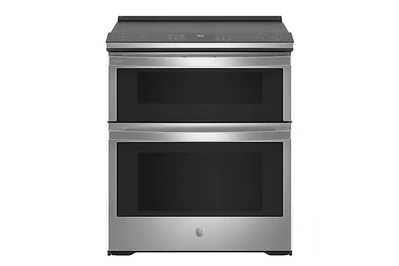
This double-oven range has one of the largest lower ovens we’ve seen in this category and an extra-powerful, flexible cooktop. But it doesn’t have a storage drawer, and you have to stoop to access the lower oven.
The GE Profile PS960YPFS is an uncommonly nice radiant-electric double oven. It’s a great choice if you want two ovens but can only fit a 30-inch stove into your kitchen.
The PS960YPFS has an outstanding cooktop. It has five elements, a large and strong power burner (12 inches, 3,600 watts), and a setup for a griddle.
Its bottom oven has convection and is one of the largest in this category. The 4.4-cubic-foot lower oven has true convection, with a fan that blows in two directions. With 17.5 inches of clearance, it’s at least an inch taller than many competitors. This means it can fit two baking trays, a tall Dutch oven, or a large roasting pan. (GE Appliances told us it should be able to handle a 23-pound turkey.)
Its 2.2-cubic-foot top oven is ideal for smaller cooking projects. The top oven isn’t convection, but it has bake, broil, and keep-warm functions, plus settings for two racks. It’s great for when you’re using one sheet pan or skillet or when you want to keep a peach pie away from a roasting fish.
It has advanced smart features. The PS960YPFS has Wi-Fi connectivity, so you can use the GE Appliances SmartHQ app on a smartphone or other smart device to track the status of your oven temperature and timer or to control oven settings (remotely or with voice commands).
Connectivity also lets you upgrade to new oven features. Unlike any of our other picks, the PS960YPFS can connect with a GE Appliances range hood via Wi-Fi connectivity so that it can turn on and off automatically as you’re using the appliance.


Flaws but not dealbreakers
All double ovens have some disadvantages. There’s no storage drawer. Bending down to the lower oven can be a pain, and it probably won’t fit the largest turkeys on Thanksgiving. There may also be some heat transfer between the two ovens if you were trying to use one oven at a very low temperature and the other at a much higher one.
It is not available with an induction cooktop. But we do have a recommendation for a double-oven induction range.
It comes in just one finish. The PS960YPFS is available in fingerprint-resistant stainless steel.
Other front-control ranges worth considering


If you want an induction range with cooktop knobs instead of a digital control panel: The new GE Profile PHS700AYFS is an affordable induction front-control range with knobs that control its four-element cooktop. This range looks similar to our top pick, the radiant-electric GE GRS600AV, though it does not have a small, lower-powered center element on the cooktop. Its oven features resemble those of the GRS600AV.
The Electrolux ECFI3068AS is a handsome, more expensive freestanding induction range with knobs, and it is manufactured by the company that produces our Frigidaire picks. It has four elements with a cooktop bridge, true convection, and a steam self-clean setting. It also has a rare two-year warranty. Its 4.6-cubic-foot oven is slightly smaller than most of our picks.


If you want an extra-large oven: The Whirlpool WEE750H0HZ is a radiant-electric front-control range with 6.4 cubic feet of oven capacity and true convection. It has a five-element cooktop and comes in black or white in addition to stainless steel.
The Whirlpool WSIS5030RZ is an affordable induction range with 6.4 cubic feet of oven capacity, true convection, and no-preheat air-fry. Its four-element cooktop has a powerful large element and a bridge feature to make using a griddle easier.
The Whirlpool Corporation also manufactures the Maytag MES8800PZ, which has a 6.4-cubic-foot oven and a slightly more modern look, and the KitchenAid SEG700ESS, which also has a 6.4-cubic-foot oven but has a sturdier build and a more professional look than the Maytag. (The KitchenAid KSIS730PSS is the induction model of the KSEG700ESS.)
If you want a front-control range that is particularly easy to clean: The new radiant-electric Whirlpool SES7530RV is a smart, five-element range with a coating on the surface of its glass-ceramic cooktop that is designed to make cleaning up cooked-on food easier. (Cooktop stains are a common complaint with radiant-electric ranges.) Whirlpool calls this “WipeClean,” and we’ve seen it demonstrated, though we have not tested the feature ourselves yet. This model also has true convection and no-preheat air-fry.
If you want any other brand: There are many other perfectly fine freestanding front-control ranges that we don’t recommend in this guide but match the price, features, and functionality of our picks. From our reader surveys, we know many owners are very satisfied with these stoves.
But our reporting, research, and surveys also consistently revealed that the ranges from brands other than those we recommend can fall short when it is time for repairs, support, or service. That said, here are a few models that stood out in our research and may be worth a look depending on your preferences:
The Samsung Bespoke line includes radiant-electric and induction ranges with a 6.3-cubic-foot true-convection oven, as well an induction range with a double oven. Some of these models come in distinct finishes like white glass. Most are smart and integrated with the recipe hub in Samsung’s SmartThings app, which is more robust than many appliance apps, as it already works with countless other products and applications.
LG has an especially large selection of induction ranges, including the LSIL6332FE, a smart, 6.3-cubic-foot range with basic convection and a digital control panel, and the LSIL6336F, a smart, 6.3-cubic-foot range with true convection and knobs that control the cooktop. It also has InstaView, a feature where you can knock twice on the oven door to turn on the interior light.
The Hisense HFE3501CPS is a radiant-electric range with a distinctively spare design and a 5.8-cubic-foot oven with true convection. This model comes in one finish and has a rare two-year warranty.
The competition
The GE GRS500PVSS looks similar to our top pick, the GE GRS600AV, but it has a standard oven instead of a basic convection oven, no removable bottom tray, and the bottom oven element is exposed, which can make it harder to clean. Yet it often costs nearly the same as models with more features.
The GE Profile PHS93XYPFS is a slightly more expensive version of our upgrade pick, which has an induction cooktop. The PHS93XYPFS has a camera in the oven, allowing you to see inside via an app on a connected device. It’s a cool feature, but we think most people are unlikely to use it.
The GE Profile PHS93EYPFS, which has an induction cooktop, is a slightly more expensive version of our upgrade induction pick because it is Energy Star–certified. But it may not be worth the extra cost for most people given how efficient induction ranges already are.
The radiant-electric GE JS760, our previous top pick until it was discontinued in 2024, may still be available in stores. It had similar functionality to our current top pick, the radiant-electric GE GRS600AV, but it isn’t smart, and the bottom of the oven isn’t removable for cleaning.
What to look forward to
We plan to evaluate the radiant-electric Bosch 100 Series HEF1050MU range, part of a lower cost suite of appliances by the company.
In addition, we’d like to assess true slide-in or premium models under $5,000 that we may have previously only discussed in our guide to high-end ranges. These include the Frigidaire Professional PCFE3080AF; the JennAir Rise JIS1450ML, a true slide-in range with an induction cooktop and a 6.4-cubic-foot oven; and the JennAir Rise JES1450ML, the radiant-electric version of the JIS1450ML. (JennAir is part of the Whirlpool Corporation.)
Also on our list: 30-inch models from the Smeg Professional Series and the Bertazzoni Professional Series, and a few models from Café (owned by GE Appliances), including the radiant-electric Café ES700P3MD1 and the Café HS900P2MS1, which has an induction cooktop.
This article was edited by Ingrid Skjong and Marguerite Preston.
Sources
Jennifer Zink, marketing manager, Schott North America, video interview, October 7, 2024
Natalie Walsh, director of experience marketing for food preparation, Electrolux Major Appliances North America, in-person interview, July 17, 2024
Bree Lemmen, brand manager, Whirlpool Corporation, video interview, May 30, 2024
Lauren Hertel Thompson, product marketing senior manager, GE Appliances, video interview, March 22, 2024
Nicholas Shircliff, senior product marketing manager for freestanding appliances, GE Appliances, video interview, April 17, 2024
Steve Swayne, director, Electrolux cooking competence center, video interview, March 6, 2023
Michael Rockstroh, head of North American operations for Bertazzoni, in-person interview, February 1, 2023
Katherine Smindak-Grodman and Crystal Piligian, showroom sales consultants for Sub-Zero, Wolf, and Cove, in-person interview, November 7, 2023
Meet your guide

Rachel Wharton
I am based in Brooklyn, New York, and I write about refrigerators, ranges, ovens, microwaves, cooktops, kitchen ventilation, and any other large appliances that relate to cooking, eating, or food. This work includes conducting hands-on tests and researching the best products. It also requires staying on top of environmental, health, and safety regulations, as well as related trends in cooking, smart home, accessibility, tech, and kitchen design.
Further reading
High-End Vibes, On-Budget Prices: Six Standout Gas Ranges
by Rachel Wharton
The GE GGS600AV and the Whirlpool WSGS7530R are good-looking gas slide-in ranges, each with a strong combination of features and functionality — at a great price.What’s the Point of a Double-Oven Range?
by Tyler Wells Lynch
If you want the convenience of a second oven but your kitchen has the space only for a regular 30-inch stove, you could consider a double-oven range.
Let ’Em Cook! Our 16 Favorite Electric Ranges
by Rachel Wharton
Our 16 favorite electric ranges include radiant-electric and induction stoves with useful features and good looks that will please all types of cooks.Cook Over a Live Flame on These Gas Ranges
by Rachel Wharton
The GE GGF600AV has a convection oven and an excellent cooktop for the price, and it offers the best looks and build quality of any affordable gas range we found.


Advertisement
SKIP ADVERTISEMENT