


By Antara Sinha
Antara Sinha is a writer covering food and kitchen gear. She has cooked over 2 gallons of chocolate pudding to test and find the best saucepan.
Few foods do high-low versatility like canned tuna. You can fold a $2 tin of chunk light into a mountain of mayo for an economical lunch, or you can layer a can of sustainably caught yellowfin atop a Niçoise salad elegant enough to serve to company.
The latter fancy possibilities are largely due to the renaissance of canned tuna we’re living through. Even just a decade ago, the canned tuna aisle was dominated by a handful of brands, with inexpensive water-packed varieties taking up most of the shelf space. But Americans have woken up to the magic of tinned fish in recent years, and tuna traders have taken notice.
Wirecutter’s kitchen experts tasted nearly 40 cans of tuna, looking for the most flavorful, snackable, tuna-salad-able fish out there. And though we had to endure many sludgy tins along the way, we eventually found seven cans that we’d eagerly make staples — many of which you can find in your local grocery store at much better prices than you’d find online.
The research
The best solid white tuna in olive oil: Conservas Ortiz


Top pick
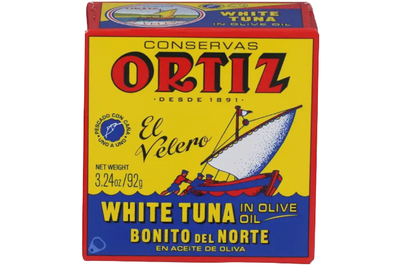
With its large, pale-pink flakes of meat, this oil-packed tuna is delicious enough to eat on its own.
As soon as we peeled back the lid on Conservas Ortiz White Tuna in Olive Oil, revealing neatly packed pieces of rosy-pink albacore tuna, we knew we were in for a treat. This is not the tuna your elementary school cafeteria stuffed between soggy pieces of white bread — it’s a luxurious, grown-up tin that was the near-unanimous favorite among our tasters.


Suspended in cloudless, yellow olive oil, the lightly salted fillets of albacore are meaty and savory without veering into unpalatably fishy territory. Between the fattiness from the fish and the olive oil, each bite is luscious and balanced. One taster said it has “a mild briny sweetness,” while another — and not the only one — commented, “I immediately want to eat a whole can of this one.”
Between its delicate yet balanced flavor profile and its price (a 3.24-ounce can costs roughly $7), this is not the kind of tuna you bury under mayonnaise or chili crisp. Allow it to shine on a conservas platter, atop a salad, or with your favorite crackers for a simple, indulgent lunch.
Ingredients: albacore, olive oil, salt
Fishing method: pole and line
Our second-favorite solid white tuna in olive oil: Fishwife Albacore


Runner-up
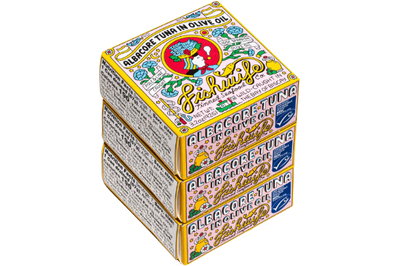
With its milder flavor, this trendy canned tuna is especially versatile. It’s expensive, though.
Fishwife has become a breakout star of the tinned fish boom, with its colorful packaging and flavored tins. And though we haven’t fallen in love with all of the brand’s tins, its Albacore Tuna in Olive Oil really impressed us during testing.


The fish is firm and flaky — flavorful enough for snacking on its own but mild enough to be pieced into pasta or sprinkled with soy sauce on top of a bed of warm rice. Compared with our top pick, this tuna has less of an oceanic flavor, so if you prefer a subtler fish, this can is your better bet.
Fishwife’s albacore is also a bit dryer than that of Ortiz, which is why the latter ultimately came out on top. But if you can’t find Ortiz cans at your grocery store and you’re willing to pay more (a 3.2-ounce tin can cost you anywhere from $7 to upwards of $10), we recommend Fishwife’s tuna, which won over new fans during our tasting.
Ingredients: albacore, olive oil, salt
Fishing method: pole and line
The best solid light tuna in olive oil: Rio Mare


Top pick
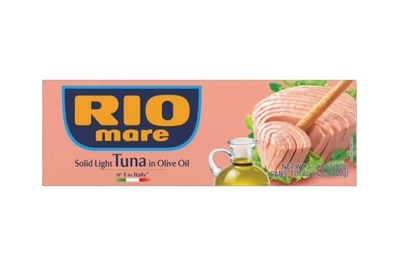
We love the richness and sweetness of this oil-packed yellowfin tuna.
(pack of three)
“Light tuna” is a catchall term that encompasses cans of yellowfin and skipjack (and other species, though less commonly). Compared with white tuna, which only refers to albacore, light tuna is typically softer and fishier. And within this category, the Italian-imported Rio Mare Solid Light Wild Tuna in Olive Oil delighted us the most.


The fish is rich, with a welcome sweetness that other tins we tested lack. The flesh is also appealingly dark pink, which is typical of light tuna, but many of the others we tried had an off-putting gray pallor. And while the olive oil in the tin we cracked open was a little cloudy, it still had a fresh, fruity flavor indicative of good quality.
Rio Mare’s cans come in a variety of sizes, and are sometimes sold in sets. For example, you can find a pack of three, 2.3-ounce tins for around $10 — that's a great deal.
Ingredients: yellowfin or skipjack, olive oil, salt
Fishing method: pole and line, handline, and purse seine
The best solid light tuna in water: Tonnino Yellowfin


Top pick
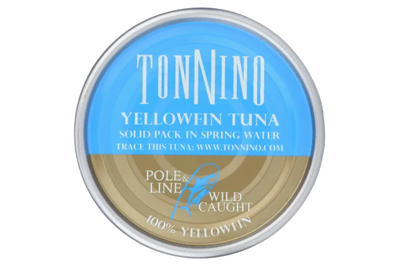
This can stands out for its squeaky clean flavors that balance brininess and sweetness.
It’s rare during a tasting panel for us to finish an entire sample; testers more often than not take tiny bites to save their appetites and prevent palate fatigue. But within minutes of cracking open the Tonnino Yellowfin Tuna Solid Pack in Spring Water, the can was scraped clean.


What sets this can apart is its short ingredients list. It’s packed in just water, whereas many of the other “water-packed” cans we sampled also contain fillers like vegetable broth, which can lend an odd savory flavor. But with this tin, tasters went in for seconds, and then thirds, enjoying it plain, in tuna salad, and on top of steamed rice sprinkled with chili crisp and soy sauce.
Typically, water-packed tuna is ideal for mixing into casseroles and other saucier dishes, where the tuna has other seasonings and fat to mingle and marinate in. And while albacore is a great default, canned yellowfin tuna like this one from Tonnino — which has tender flesh and a pronounced brininess — can really elevate a dish. When we mixed it with mayo for a simple tuna salad, we appreciated its stronger flavor, and its flakes didn’t break down into total mush.
Ingredients: yellowfin, water, sea salt
Fishing method: pole and line
The best solid white tuna in water: Kirkland Albacore


Top pick
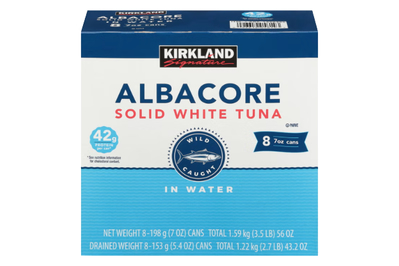
If you have a tuna-loving household, Costco’s water-packed albacore is easy to buy in bulk and versatile enough for many preparations.
For those seeking a water-packed tuna that’s a little less soft and fishy than our pick from Tonnino, Kirkland Signature Albacore Solid White Tuna in Water — which comes in 7-ounce cans — outperformed all other tins of its kind.


Our tasters appreciated this tuna’s mildness, brightness, and saltiness, but some found the flesh to be a bit dry. For albacore packed in water, though, that texture is to be expected. And when we made this tuna into a salad that we scooped up with saltine crackers, the dryness was barely perceptible. And we loved how substantial and meaty the flakes were.
It also has the best value of all the options we tested, though like many Kirkland Signature staples, you can only buy it in bulk; for around $20, you get a pack of eight 7-ounce cans. That means the tuna is less than 50 cents per ounce, whereas our top pick, Conservas Ortiz White Tuna in Olive Oil, costs over $2 per ounce. But Kirkland Signature tuna is caught via longline fishing, a method associated with high amounts of bycatch.
If you don’t have a Costco membership, Bumble Bee Solid White Albacore in Water is nearly indistinguishable, and it’s widely available at many national grocery stores. The similarity in quality makes sense: Bumble Bee partners with Costco to make its Kirkland Signature tuna.
Ingredients: albacore, water, sea salt, sodium acid pyrophosphate
Fishing method: longline
The best chunk light tuna in water: Trader Joe's Skipjack


Trader Joe’s Chunk Light Skipjack Tuna in Water - $2
If you grew up in the US, there’s a good chance your introduction to canned tuna was chunk light — it’s the most popular type stateside. And because it’s an amalgamation of tuna pieces instead of one intact bit of flesh, it also tends to be inexpensive.


After we worked our way through many off-puttingly gray and mushy cans of chunk light tuna, Trader Joe’s Chunk Light Skipjack Tuna in Water stood out for its pink flesh and salt level, with no off-flavors. While we wouldn’t recommend this tuna to snack on — its texture is a little too sludgy, and it’s very salty — we enjoyed it when we disguised it in a tuna salad.
It’s also caught sustainably using the pole-and-line method, which is admirable given its affordability.
Ingredients: skipjack tuna, water, sea salt
Fishing method: pole and line
Other canned tuna worth considering


If you’re looking for ultra-savory tuna, consider American Tuna Wild Albacore Tuna Fillets, which is cooked only once, directly in its can without water or oil. That makes for a decidedly meatier, more “cooked” flavor.
The majority of canned tuna sold in the US is cooked more than once — first outside of the can and then once again during the canning process.


This cooked-only-once flavor polarized our tasting panel: Some found it overly salty, with a jerky-like intensity, while others absolutely loved it for those same reasons.
American Tuna also offers one of the most traceable tunas that we tasted; the brand catches its fish using the sustainable pole-and-line method, and the top of each can lists the vessel, captain, and port that caught the tuna.
Just beware, it doesn’t have the most appetizing appearance: It looks shrunken and somewhat congealed in the can, with visible browning around its edges.
Ingredients: albacore, sea salt
Fishing method: pole and line
Why you should trust me
I have years of experience as a food writer, editor, and recipe developer. My work has appeared in publications including Food & Wine, Bon Appétit, and Serious Eats.
For this guide:
- I dove head-first into the expansive and evergrowing world of canned tuna, which included familiarizing myself with fishing practices and canning methods, researching the various species of tuna commonly used, and scouring supermarket shelves to identify the most popular tins.
- I attended the SFA Summer Fancy Food Show in New York City and the Natural Products Expo West in Anaheim, California, where I looked out for new tinned fish trends and brands.
- I assembled a panel of tasters including kitchen editors Marilyn Ong and Amanda Arnold and writer Maki Yazawa. We all have a certificate in Sensory Evaluation from Rutgers University.
- Like all Wirecutter journalists, I review and test products with complete editorial independence. I’m never made aware of any business implications of my editorial recommendations. Read more about Wirecutter’s editorial standards.
How we picked and tested


Like many food staples we cover — marinara sauce, veggie burgers, and pickles, to name a few — canned tuna has grown into a much larger, more robust category in recent years. For this guide, we focused on cans you can find at your local supermarket, looking for both affordable and higher-quality (but not specialty) tins.
Over the course of a week, our team sampled 37 cans of tuna. We grouped together similar tins but concealed labels to prevent bias. Here’s everything we considered along the way:
Wide distribution: Because we aim to review and recommend foods that all readers can easily buy, we kicked off testing by identifying the most widely distributed cans of tuna sold in many major grocery stores. Those chains include Walmart, Aldi, Costco, Whole Foods, Target, Trader Joe’s, and H Mart.
To keep testing manageable, we focused on four popular types: white tuna in water, white tuna in oil, light tuna in water (including both fillets and chunk light varieties), and light tuna in oil. And to confidently and fairly compare tunas side by side, we tested the categories one at a time.
Appearance: We noted how the tuna looked in a freshly cracked can, taking into account the color and texture of the flesh, the size and integrity of the fillets, and the appearance of the oil or water. We gave points to bright, fresh-looking tuna and dismissed tins that were gray, sludgy, or otherwise visually off-putting.
Flavor and texture: We then tasted our way through the tunas, noting the flavor profile and texture of each. We also considered how we would most enjoy eating each one. Whereas some tunas are best eaten unadulterated, others are ideal for mayo-heavy salads or casseroles.
As one final test, we prepared our favorite water-packed cans into tuna salads to see how they stood up to competing flavors like mayonnaise, lemon, and additional salt. With those insights, we determined the best cans in each category.
Sustainability and labor practices: We prioritized tuna that was harvested sustainably according to standards laid out by the Monterey Bay Aquarium Seafood Watch or the Marine Stewardship Council (MSC). This tuna does tend to cost more than unsustainably harvested tuna, though, so we did consider some companies that didn’t meet the criteria.
The canned tuna industry has also long been plagued by allegations of poor working conditions and human rights abuses. While the industry has made improvements over the years, Bumble Bee Foods, for example, is currently facing allegations of forced labor by fishermen. (The company has denied the bulk of the fishermen’s claims.)
How to read canned tuna labels
Tuna labels aren’t exactly easy to parse — it can be surprisingly tricky to understand what you’re buying. Here’s a breakdown of the most common terms you’ll find on a can.
White versus light tuna: In the US, canned tuna is usually labeled as either “white tuna” or “light tuna” rather than by species, though some brands also identify the exact species used in the can.
White tuna always refers to albacore, which is visually, well, white. It’s a large species of tuna, so it generally contains more mercury than smaller species. It’s also a very popular type of tuna in the US, with its meaty texture and a milder flavor. (It’s no coincidence one of the biggest companies in the industry is named Chicken of the Sea.)
Light tuna, on the other hand, can refer to a variety of smaller species of tuna, which often have more complex, overtly “fishy” flavors. The flesh also tends to have a pinker or browner hue than albacore. The most common species of light tuna sold in the US are skipjack, yellowfin, bigeye, and tongol. Skipjack are often smaller in size than albacore, so they generally have a lower mercury content.
Solid versus chunk: “Solid” cans are packed with intact fillets of tuna, which are dense, meaty, and flaky. Chunk tuna, on the other hand, is a mishmash of fish flesh pieces, which is why it has a shredded, mushier texture.
Pole and line: This is the gold standard for sustainable tuna fishing. Each fish is caught one by one on fishing poles, which helps keep fish populations abundant and reduces bycatch of other marine life. This method is also slower, which is why companies that use pole-and-line fishing methods (like Conservas Ortiz and Fishwife) can be more expensive. Because pole-and-line tuna fishing often operates on vessels closer to home with more regular returns to port — unlike longline fishing and some purse seining methods where boats are out at sea for months at a time — it often has a better track record for human rights violations as well.
Longline and purse seining: Other common methods of fishing include longline fishing and purse seining, which are used by large companies like Bumble Bee, Dongwon, and StarKist. These methods are often criticized for their large amount of bycatch, which refers to the marine life (including protected animals like sea turtles, dolphins, whales, and even seabirds) that get unintentionally caught and then discarded.
Wild-caught: When you buy many types of seafood, such as shrimp and salmon, it’s often marketed as either farm-raised or wild-caught. Interestingly, almost all tuna that gets canned for human consumption is wild-caught, but many companies still use the term on their labels, likely because customers associate it with higher quality.
Marine Stewardship Council: To carry the MSC’s blue label, a fishery has to pass an independent audit every year to verify they maintain healthy fish stock levels and that the fishing operation has minimal impact on the marine environment. Just note that this certification is granted toward fisheries, not entire brands or companies.
If you’re looking for an MSC-certified can, read labels carefully: Some products from a company may be MSC-certified, while others are not.
Dolphin-safe: If a can is labeled “dolphin-safe,” that means the tuna meets legal standards about protecting dolphins during tuna harvest. Among other requirements, the tuna can’t have been caught by intentionally encircling dolphins with purse seine nets. But it doesn’t address the accidental bycatch of other marine life. (In the US, dolphin-safe labeling is governed by NOAA Fisheries under the Dolphin Protection Consumer Information Act.)
The competition
White tuna in oil
Tasters found Wild Planet’s Albacore Solid Wild Tuna in Extra Virgin Olive Oil to have mild but highly unappetizing off-notes, like petrol and smoke.
Similarly, the oil in the Sea Tales Solid White Albacore Wild Tuna in Olive Oil had some slightly rancid, chemical flavors.
On top of looking disconcertingly pale, our can of Chicken of the Sea Solid White Premium Albacore Tuna in Oil was dry, chalky, and bland.
Trader Joe’s Solid White Albacore Tuna in Olive Oil turned off tasters with its slightly mushy, stick-to-your-teeth tackiness.
White tuna in water
We found StarKist's Solid White Albacore Tuna in Water gritty and overly salty, with an off-putting fishy smell.
Our tin of Natural Catch White Albacore in Water was very dry, with one taster noting an unexpected grapefruit flavor.
We found Genova’s Albacore Tuna in Water squeaky and watery, with some metallic flavors.
The 365 by Whole Foods Market Albacore Tuna in Water had a bland and bitter taste, as well as a simultaneously mealy and stringy texture.
Sustainable Seas Chunk Albacore Tuna in Water was gritty, tough, and dry.
Mushy, watery, and visually unappealing, Bumble Bee's Chunk White Albacore in Water earned no fans during our tasting.
Tasters found Aldi’s Northern Catch Solid White Tuna bland, tough, and squeaky.
Target’s Good & Gather Solid White Albacore Tuna in Water was bland and mealy, with some tasters noting a chlorine or metallic flavor.
Trader Joe’s Solid White Albacore Tuna in Water was chalky and extremely firm, with some unexpected fruity flavors.
Single-cooked white tuna
A spongy, mushy texture and bitter, stale flavors made Safe Catch Wild Albacore Tuna an easy dismissal.
Light tuna in oil
While we liked the meatiness of Dongwon’s Light Standard Tuna, we also noted a metallic taste.
Cento’s Tuna Fish in Olive Oil had a shreddy, pasty appearance that some tasters noted looked “messy” and reminiscent of cat food. It also had an unexpected acidic flavor.
Sea Tales Solid Light Skipjack Wild Tuna in Olive Oil was dry, with prominent chemical flavors.
Aldi’s Northern Catch Chunk Light Tuna in Oil was very fishy, with a flavor more akin to oily sardines than tuna.
Light tuna in water
On top of its mushy texture, Walmart’s Great Value Chunk Light Tuna in Water had an acidic aftertaste.
Both Aldi’s Northern Catch Chunk Light Tuna in Water and Northern Catch Sustainably Caught Skipjack Chunk Light Tuna in Water suffered from major textural issues on top of being bland.
We found Target’s Good & Gather Chunk Light Tuna in Water chalky, with a “low tide” fishy smell. And the brand’s Premium Wild Chunk Light Skipjack Tuna in Water was chewy, with the same off-putting smells as the less-premium can.
Bumble Bee Chunk Light Tuna in Water was particularly pasty-looking, and its texture could best be described as gelatinous.
Gray and visually unappealing, StarKist Chunk Light Tuna in Water was unsurprisingly disliked by our entire tasting panel.
This article was edited by Amanda Arnold and Ben Frumin.
Meet your guide

Antara Sinha is an associate staff writer reporting on cooking and kitchen gear at Wirecutter. She was previously at Bon Appétit, Food & Wine, and Cooking Light, and she has over seven years of experience writing about food, drink, and culture. She considers herself an ice cream connoisseur and believes the Chipwich to be a perfect food.
Further reading
The Best Tinned Fish
by Marguerite Preston
We tasted over 100 tins of fish from eight countries to find 24 favorites that are fit for parties, gifting, and more.We Tried 59 Tins of Sardines (and We’re Still Not Sick of Them).
by Kathleen Squires
We tasted 59 tins of sardines from nine countries to find our five favorites.The Best Olive Oil You Can Buy at the Store
by Michael Sullivan
We taste-tested 28 types of widely available extra-virgin olive oils. Here are our favorites.
All the Frozen Pizzas Worth Your Freezer Space
by Mace Dent Johnson
Over the years we’ve tasted 53 popular frozen pizzas, from traditional cheese and pepperoni pies to gluten-free and vegan options.


Advertisement
SKIP ADVERTISEMENT