


Andrea Barnes is a writer covering large cleaning appliances. Each year for testing, she runs over 120 dish cycles and washes 120 loads of laundry.
Whether you’re tackling a sink full of dishes or simply washing your chef’s knife, squirting dish soap is likely part of your daily routine. Your chosen soap should make washing dishes a little easier, and it gets bonus points if it smells good (or at least doesn’t smell awful).
After we tested 35 dish soaps, Palmolive Ultra Pure + Clear Dish Liquid bubbled up to the top as the best choice for hand-washing dishes.
For those who prefer sprays designed for spritzing directly on dirty dishes, Dawn Platinum Plus Powerwash Free & Clear is the best all-around option. For beyond-the-sink cleaning, like spot-treating makeup stains on fabrics or scrubbing hard surfaces (like floors, walls, and tables), we recommend Dawn Ultra Dishwashing Liquid. And if your top priority is reducing plastic waste, Cleancult Dish Soap Lemon Verbena does a great job cleaning and comes in a refillable, recyclable aluminum bottle.
Everything we recommend
Top pick
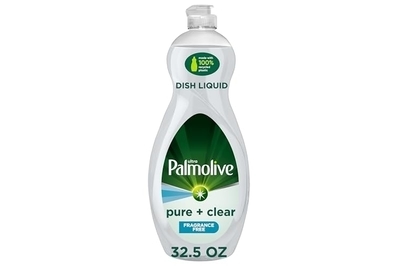
This well-rounded, fragrance- and dye-free dish soap is an excellent cleaner, and it’s hypoallergenic.
(32.5 ounces)
(32.5 ounces)
Top pick
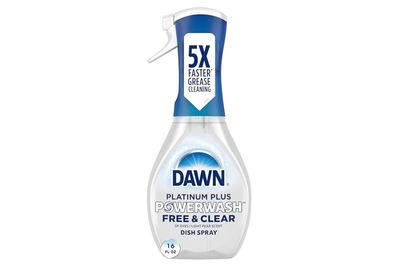
This clear dish spray busts through grease and grime quickly and effectively. It’s potent, though, and one spritz is usually all you need.
(16 ounces)
Best for...
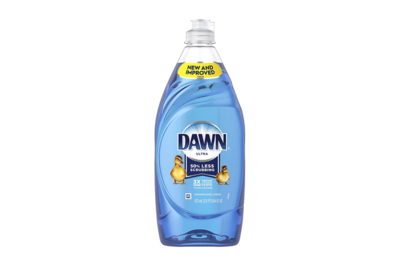
This electric-blue dish soap excels at removing oil stains from fabrics and beyond-the-sink cleaning chores. But it contains synthetic dyes.
(30.8 ounces)
Best for...
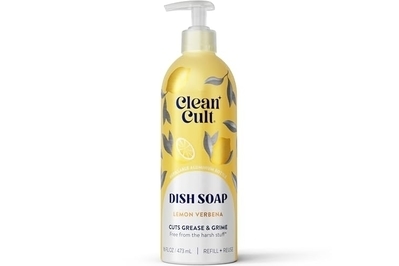
This plant-based, pleasant-smelling dish soap cleans well, and it comes in a refillable and recyclable aluminum bottle. It is dye-free, but it contains allergens that some may find irritating.
How we tested
- Cleaning performance
We assessed each dish soap’s ability to remove oils and other common soils.
- Scrubbing effort
We considered how much effort it took to scrub stubborn soils off dishes and professionally greased stainless steel tiles.
- Versatility
To test each dish soap’s versatility, we not only hand-washed dishes but also cleaned hard surfaces and attempted to remove stains from textiles.
- Formula
We favored dish soaps that are fragrance-free or mildly scented and hypoallergenic.
Top pick
This well-rounded, fragrance- and dye-free dish soap is an excellent cleaner, and it’s hypoallergenic.
(32.5 ounces)
(32.5 ounces)
Of the 35 dish soaps we tested, Palmolive Ultra Pure + Clear Dish Liquid was the best of the bunch overall. It handily lifted oil from plates, and scrubbing through a variety of soils took minimal effort. In our testing, this dish soap cut grease with ease, even on industrially greased stainless steel tiles.
Ultra Pure + Clear is fragrance- and dye-free, as well as hypoallergenic. This soap dispenses easily from the bottle, and it rinses clean from a sponge. In our informal sniff test, we found that sponges used with this soap didn’t smell bad over time.
This dish soap typically costs about 12 cents per ounce.
Top pick
This clear dish spray busts through grease and grime quickly and effectively. It’s potent, though, and one spritz is usually all you need.
(16 ounces)
If you prefer a spray-on dish cleaner, Dawn Platinum Plus Powerwash Free & Clear is the best all-around dish spray. It’s easy-to-use and highly effective, powering through grease stains in record time in my tests.
This formula is potent, and using too much can lead to an overload of suds (one spritz usually does the trick). Platinum Plus Powerwash Free & Clear has a light, pleasant pear scent that is not overpowering, but you may not like it if you’re sensitive to fragrance.
This dish spray typically costs about 32 cents per ounce.
Best for...
This electric-blue dish soap excels at removing oil stains from fabrics and beyond-the-sink cleaning chores. But it contains synthetic dyes.
(30.8 ounces)
Dawn Ultra Dishwashing Liquid does a fine job of washing dishes. But it truly shines when it’s applied to cleaning projects that remove oils, like wiping down grease-splattered kitchen backsplashes, polishing eye glasses, or spot-treating oily fabric stains.
Dawn Ultra has a new scent, which launched in 2024 and is milder than that of the brand’s other dishwashing liquids (including our previous pick, Dawn Platinum Dishwashing Liquid). Dawn Ultra contains synthetic dyes and the preservative methylisothiazolinone (often referred to as MI or MIT), which some people are allergic to.
This dish soap typically costs about 18 cents per ounce.
Best for...
This plant-based, pleasant-smelling dish soap cleans well, and it comes in a refillable and recyclable aluminum bottle. It is dye-free, but it contains allergens that some may find irritating.
Cleancult Dish Soap Lemon Verbena was the best plant-based, dye-free dish soap not packaged in plastic that we tested. It cleaned well, though not quite to the level of our other picks.
It comes in a refillable and recyclable aluminum bottle (but it has a plastic pump), and the refill liquid is packaged in a recyclable paper carton. The pleasant-smelling formula doesn’t contain synthetic dyes, but the fragrance is naturally derived and potentially allergenic. (There is no fragrance-free version at this time.)
This dish soap is the most expensive of our picks, and it typically costs about 37 cents per ounce.
The research
Why you should trust us
I’m a writer at Wirecutter covering large cleaning appliances and the detergents used in them. I have tested dozens of dishwashers and even more dishwasher detergents. I am also adept at dirtying plates in the name of research.
We’ve been recommending dish soap since 2016. For this guide:
- I researched dozens of dish soaps and have tested over 40 as of 2026.
- I polled almost everyone I know about their dishwashing habits, and I practically drove my closest friends and family to tears with my nonstop questions.
- I interviewed an array of experts, including two chemical engineers who are experts in surfactants, representatives from multiple dish soap brands, and a spokesperson from the Environmental Working Group (EWG).
- I read several academic papers on the science of surfactants and dish soap.
- Paid testers of diverse backgrounds and mobility levels tried a handful of dish soaps at our office in Long Island City, New York.
- I visited Procter & Gamble’s research and development facilities in Cincinnati, where I toured the company’s hand-dish lab and interviewed several detergent formulators about the differences between dish soap and dishwasher detergent.
- Like all Wirecutter journalists, I review and test products with complete editorial independence. I’m never made aware of any business implications of my editorial recommendations. Read more about our editorial standards.
How we picked and tested


Dirty dishes are covered with plenty of difficult soils, like blobs of dried yogurt, crusts of baked egg, and glue-like streaks of oatmeal. Water, wiping, and scrubbing can tackle many of these, but oil and grease require dish soap, explained Brian Grady, a chemical engineering professor and the director of the Institute for Applied Surfactant Research at the University of Oklahoma. “With dish soap, the goal is to make fats, which naturally resist water, soluble,” he said.
Dish soap is powered by surfactants (short for surface-active agents), which are soap-like molecules that bind oil and water together so they can be washed away. Surfactants are a major component in all kinds of cleaning products, but they are especially important in dish soap.
Most of the dish soaps we tested were either traditional liquid formulations or foaming dish sprays, but we also tested concentrated options and solid bars that are marketed as more sustainable (most of these did not clean particularly well).
Here’s how we assessed traditional dish soaps:
pH level: Common household cleaners are usually either acidic or alkaline, and both types easily bust through grit and grime. But since traditional dish soap comes into contact with skin (which is slightly acidic), it should have a pH ranging from neutral to slightly alkaline to prevent irritation, explained chemical engineer and surfactant expert Steven Abbott. Achieving this ideal pH in a high-performing cleaner is a difficult feat of chemical engineering, he emphasized.
We tested the pH of every traditional dish soap, both diluted and straight. Most of them fell within an acceptable, skin-safe range. We disqualified a few moderately alkaline dish soaps (including several bar-style soaps) from further testing, reasoning that if they failed the first basic requirement of a dish-soap formula, there was no need to evaluate them further.
Because dish sprays are not meant to come into prolonged contact with skin, we did not include them in this qualifying criteria.


Grease-cutting and cleaning power: We ran multiple series of cleaning tests. First, we combined a blue oil-based food dye with canola oil and spread 4 mL of the mixture onto a plate. After leaving the plates to dry for about five minutes (for two rounds of tests) and overnight (for one round), we soaked the dishes for two minutes in 75 °F water that had been mixed with 1 teaspoon of dish soap for 20 seconds.
This method measures how the dish soap alone works to clean away oil, and it doesn’t involve scrubbing, which is a hard variable to consistently control. We eyeballed the amount of remaining oil in comparison with our control, which had about 40% of the oil left. And we gave each dish soap a score: excellent (5% to 10% oil remaining); very, very good (10% to 15% oil left); very good (15%); good (20%); okay (25%); and poor (35% or more).


Then we ran the highest-performing dish soaps through a modified version of our dishwasher test. We soaked dishes, which were coated in several types of soils, in each formula to see how they fared. We also soaked and scrubbed porcelain and stainless steel tiles; these tiles had been professionally treated with a baked-on grease that is incredibly hard to remove. We recorded how many swipes it took to clean the tiles and how much effort it took to do so. (Two Wirecutter staffers helped us with this test; they didn’t know which dish soaps they were using, and their conclusions were the same.)


Additionally, a group of paid testers scrubbed sets of dishes with the highest-performing dye-free dish soaps (with brands concealed). From there, we were able to easily identify two dye-free front-runners.
Unlike traditional dish soaps, dish sprays are not designed to be used in a sinkful of water. To test them, I modified our scrubbing test and applied dish sprays to greasy casserole dishes, plates with four types of soils (again, similar to our dishwasher tests), starchy and oily plates, and industrial tiles of grime and grease. I then rinsed them and evaluated the results.
Scent, as well as smell over time: We took into account each dish soap’s fragrance (or lack thereof), and we favored fragrance-free options. We also used each dish soap with its own designated sponge for the duration of testing in order to evaluate how the product affects the sponge’s smell over time. Some soaps left sponges smelling terribly, even after repeated hot-water rinses. And other dish soaps began to smell a bit foul themselves after a few weeks. Still others came in bottles that broke easily or collected drippy gunk that was hard to clean.
Cleaning versatility: Dish soap is commonly used as a laundry-stain remover and as a cleaner for everything from stainless steel appliances to yoga mats. We tested our top contenders’ ability to clean textiles of oil-based stains like mascara, foundation makeup, lipstick, and dyed cooking oil. We also informally cleaned stainless steel surfaces.
Suds: In the cleaning industry, dish soap manufacturers tend to measure the power of a dish soap by the volume and longevity of its suds. The surfactant scientists I spoke with had a similar take: Suds indicate, on some level, that there is dish soap in the water. But suds alone are not a requirement for a good dish soap. As Grady explained, a basin of water mixed with dish soap might be even more powerful once the suds die down because the dishwashing solution is more concentrated.
Still, we paid attention to suds, though they were not an official data point in our testing.
Top pick: Palmolive Ultra Pure + Clear Dish Liquid


Top pick
This well-rounded, fragrance- and dye-free dish soap is an excellent cleaner, and it’s hypoallergenic.
(32.5 ounces)
(32.5 ounces)
A strong cleaner, fragrance-free Palmolive Ultra Pure + Clear Dish Liquid is the most well-rounded dish soap we tested.
It’s a powerful cleaner and degreaser. In our testing, this dish soap consistently removed oil and grease quickly and easily from plates. We used the Ultra Pure + Clear soap in the most challenging stress test, which involved cleaning a stainless steel tile that was professionally coated with grease. Multiple testers found that the tile cleaned with this soap needed the fewest swipes.
The formula is free of fragrances and dyes. It is Safer Choice–certified by the Environmental Protection Agency (EPA), and the EWG gives it an A in its cleaning database.
Ultra Pure + Clear Dish Liquid is also hypoallergenic, and it does not contain the synthetic preservative methylisothiazolinone, which can cause skin irritation.
Its smell didn’t change over time. Some fragrance- and dye-free dish soaps we tested began to develop an acrid odor after a few weeks and left sponges smelling foul. Ultra Pure + Clear Dish Liquid did not; sponges and dishes smelled consistently neutral.
It’s affordable and widely available. At about 12 cents per ounce, Ultra Pure + Clear Dish Liquid is one of the most affordable fragrance- and dye-free dish soaps we tested. And we’ve come across this soap fairly often in stores.
Flaws but not dealbreakers
It’s available only in a plastic bottle. Although the bottle is made of recyclable polyethylene terephthalate (PET) plastic, those looking to cut back on single-use plastics may want to try Cleancult Dish Soap Lemon Verbena, our pick with nearly plastic-free packaging.
It’s not as powerful for odd jobs. Ultra Pure + Clear Dish Liquid wasn’t quite as effective at removing oil stains from textiles or hard surfaces. It worked, but not as effortlessly as Dawn Ultra Dishwashing Liquid, our pick for household cleaning projects. (We needed to use more of the Ultra Pure + Clear Dish Liquid to get the same effect.)
Best dish spray: Dawn Platinum Plus Powerwash Free & Clear Dish


Top pick
This clear dish spray busts through grease and grime quickly and effectively. It’s potent, though, and one spritz is usually all you need.
(16 ounces)
Dish sprays are designed to be sprayed onto stubborn crud, left for a few minutes, and then wiped or rinsed off. Of the eight dish sprays that I tested, Dawn Platinum Plus Powerwash Free & Clear was the best all around.
It eradicated the widest variety of stains — especially grease. Platinum Plus Powerwash Free & Clear easily cut through baked-on oil, grease, and brownie batter, as well as cheesy pasta and sticky jam.
Technically, dish sprays like Platinum Plus Powerwash Free & Clear are solvents, not dish soap, explained Grady. Rather than lift away grease like a traditional dish soap, this dish spray “literally softens the grease,” he said, which allows you to remove it without scrubbing or soaking.
It’s easy to use. Platinum Plus Powerwash Free & Clear sprays evenly, and the nozzle simply screws onto refill bottles. And as the product begins to work on soils, the suds dissipate, providing a visual cue for when a dish is ready to be wiped down.
You can choose from multiple fragrances. While I suggest starting with the lightly pear-scented Free & Clear, Platinum Plus Powerwash also comes in a variety of scents, including apple and lemon. (The Heavy Duty version geared toward cleaning grills, tools, and cars smelled unpleasant.)
It can double as a stain remover. Over the years, I have found Platinum Plus Powerwash Free & Clear to be exceptional at spot-treating and pretreating non-biological stains, like kids paint, mascara, some magic marker, and even glue. Just one spritz should be sufficient for pretreating most stains, otherwise you risk overfilling your washing machine with suds.
Flaws but not dealbreakers
It could irritate your skin. Unlike most dish soaps, which are gentle enough for washing your hands, Platinum Plus Powerwash Free & Clear is alkaline and not formulated to come in direct contact with skin, said Morgan Eberhard, principal scientist at Procter & Gamble.
One spritz goes a long way. While it’s tempting to spray Platinum Plus Powerwash Free & Clear onto crusty bakeware or oily saucepans before loading them into the dishwasher, this can cause sudsing at the bottom of your machine (and, if done often enough, damage). Save this dish spray for hand-washing dishes, and always start with one spray.
The scent may be too much for those who are sensitive to fragrance. It’s subtle (I actually didn’t notice it until weeks into testing), but it might be too much if fragrance isn’t your thing.
It’s expensive. At about 32 cents per ounce, Platinum Plus Powerwash Free & Clear costs almost as much as our most expensive dish soap recommendation.
Best for household cleaning projects: Dawn Ultra Dishwashing Liquid


Best for...
This electric-blue dish soap excels at removing oil stains from fabrics and beyond-the-sink cleaning chores. But it contains synthetic dyes.
(30.8 ounces)
Dawn is a classic for a reason. Dawn Ultra Dishwashing Liquid shines at household cleaning tasks like washing hard surfaces and removing stains from fabric. Just a drop or two can combat greasy, oily messes without leaving soapy residue. It works well on dishes, of course, but its effectiveness and versatility outside the sink were the things that really impressed us.
It’s notably good at removing makeup and other oily stains. Dawn Ultra removes oil-based stains (especially lipstick and foundation makeup) from fabrics more efficiently than any of the contenders we tested. (For really tough oil stains, however, you’ll probably still need the enzymatic boost found in a good liquid laundry detergent.) We recommend using Dawn Ultra for spot-cleaning rather than pretreating (too much dish soap can leave behind a sudsy mess in your washing machine).
It’s powerful. Dawn Ultra is a strong degreaser that’s excellent for cleaning a variety of surfaces, like stainless steel, kitchen cabinets, and countertops.
Its new scent is milder than the classic Dawn fragrance. The current fresh scent of Dawn Ultra launched in late 2024. (If you prefer the previous version, it is available in some areas in bottles labeled “Classic Scent.”)


It does a terrific job on dishes, too. Scoring an overall “excellent” rating in our testing, Dawn Ultra was great at cleaning dishes full of gunk and grime. Our paid testers had an easy time scrubbing through plates of gritty marinara sauce.
The suds last a long time — but not too long. Suds aren’t a measure of a good dish soap, but many people prefer voluminous froth when washing dishes. Dawn Ultra delivers the suds in the sink, but for other cleaning tasks, a smaller amount creates very little soapy residue to wipe down.
Flaws but not dealbreakers
It can leave some sponges smelling funky. Dawn dish soaps have polarizing scents, and I often hear from people that the formulas make sponges smell. In our informal sniff test, the sponges designated for Dawn Ultra smelled a touch mustier than those used with other dish soaps. (Though this was easily combatted with a hot water rinse.)
It comes in a plastic bottle. Dawn Ultra comes in a pretty standard, albeit recyclable, PET plastic bottle. If you’re eager to cut back on single-use plastics, you might consider our Cleancult pick, which comes in a refillable and recyclable aluminum bottle.
The formula contains ingredients that some people want to avoid. Dawn Ultra is not hypoallergenic, and it’s formulated with synthetic dyes and fragrances.
Tools and other non-dish items can be washed with — though not soaked in — Dawn Ultra. The company recommends foregoing a soak and applying diluted soap directly instead. (Prolonged soaking can cause etching on the tools.)
It’s pricier than our top pick. At about 18 cents an ounce, Dawn Ultra costs a bit more than our top pick.
Best for (nearly) non-plastic packaging: Cleancult Dish Soap Lemon Verbena


Best for...
This plant-based, pleasant-smelling dish soap cleans well, and it comes in a refillable and recyclable aluminum bottle. It is dye-free, but it contains allergens that some may find irritating.
Among the many plant-based, dye-free dish soaps not packaged in plastic that we tested, Cleancult Dish Soap Lemon Verbena is our favorite. It’s mild yet effective, and it comes in a refillable, recyclable aluminum bottle. But it’s not without its quirks.
It’s the best dish soap of its type. Of the dish soaps we tested that purport to be sustainable, Cleancult Dish Soap consistently lifted the most oil off dishes, earning scores that ranged from “good” to “very good.”
The bottle is refillable aluminum. Cleancult Dish Soap comes in a refillable and recyclable aluminum bottle. The bottle’s pump is plastic, but it’s easier to use than a screw top, which are often found on aluminum bottles and can lead to messy pours. Cleancult refills come in recyclable paper cartons.
Its surfactants are plant-based. Most widely available dish soaps, including our other three picks, contain some surfactants that are derived from petroleum. Cleancult’s are derived from plants.
It’s certified cruelty-free. Our pick from Cleancult is the only dish soap we recommend that is approved by Leaping Bunny.
You can find it at brick-and-mortar stores. This is one of the only alternative dish soaps that’s widely available at stores like Walmart, Harris Teeter, CVS, and Walgreens.
The scent is mild and pleasant. Every tester who tried this dish soap, including those who generally don’t like fragrance, loved its smell. We preferred the Lemon Verbena scent, but it also comes in nice Fresh Rain and Wild Lavender options. Bonus: The sponge we used with Cleancult Dish Soap smelled pleasantly neutral by the end of testing.
Flaws but not dealbreakers
Stubborn messes required scrubbing. Don’t expect miracles here: Our paid testers noted that Cleancult required more elbow grease when they were using it to clean tougher soils. And you’ll probably need a stronger option, like one of our picks, for non-dish cleaning projects.
It is not hypoallergenic, and there is no fragrance-free version. Both the preservatives and fragrances used in this dish soap’s formula are potentially allergenic.
It’s pricey. At 37 cents per ounce, Cleancult Dish Soap is by far the most expensive one we recommend.
Other dish soaps worth considering
If you want to stick with Dawn but dislike fragrance: Dawn Free & Clear scored high marks too, but it ultimately lost points due to its limited availability.
If you need an extra-sudsy dishwashing liquid for grimy messes: Dawn Platinum Dishwashing Liquid, which was a pick in previous versions of this guide, delivers rich suds and powerful cleaning. But the viscous liquid creates an incredibly potent cleaning solution that can leave a stubborn residue. In contrast, a solution of our Dawn Ultra pick and water requires fewer wipe downs.
If you want a dish spray with an enzymatic formula: Method Super Shine Foaming Dish Spray is a solid choice and works well on organic soils, like starch and protein.
If you want a plant-based dish soap that has a natural fragrance and is widely available: A former top pick, Seventh Generation Dish Liquid has essential-oil-based scents, which we found to be milder than those of other popular dish soaps. (We tested both the Free & Clear and Yuzu Basil versions.) Seventh Generation dish soap didn’t perform as well as our picks in testing, and it’s not hypoallergenic (even the Free & Clear version), but it’s still worth buying.
If you want a heavy-hitting dish soap and you don’t mind scent or dyes: Palmolive Ultra Strength Dish Liquid is the scented and dyed counterpart of our fragrance- and dye-free pick, and it was a very good performer.
If you want an inexpensive, widely available throwback. Joy, a matriarch of the dish soap pantheon, is available in multiple pleasant scents, and it earned a “very good” score in testing.
If you want a different free-and-clear dish soap that works well: We almost made Puracy Dish Soap a top pick, but it lost out due to its spotty availability and an ever-so-slight difference in performance compared with that of our Palmolive top pick.
If you want suds from across the pond: We tested Fairy Dishwashing Liquid, a bright-green dish soap that has a pleasant, fresh scent and is popular in Ireland and the UK. It generated a nice amount of bubbles, and it performed on a par with our Dawn Ultra pick (both are made by Procter & Gamble), but ounce for ounce, it’s expensive to purchase in the US.
What about biodegradability?
All four of our dish soap picks are biodegradable. In fact, the surfactants in dish soaps need to be biodegradable in order to be processed in wastewater treatment plants, Grady said. Otherwise, the suds would cause buildup and create major issues for municipal water systems.
A note on potential ingredients of concern
There are typically two main surfactants in dish liquid: sodium lauryl sulfate (SLS) and sodium lauryl ether sulfate (SLES). As Grady explained, SLES is a modified version of SLS, and it has the benefit of creating less soap scum. When SLES is made, the reaction creates a small amount of a compound called 1,4-dioxane, which can be hazardous in high doses.
A risk evaluation completed by the EPA in 2020 found “no unreasonable risks” to consumers from dish soaps that contain 1,4-dioxane as a by-product. If you’re still worried about it, dish gloves create a barrier between your skin and the soap. (We like the Evriholder Glam-Gloves and the latex-free Clorox Ultra Comfort Premium Gloves.)
None of our picks contains phthalates, a class of chemicals known as plasticizers used in some fragrances.
The competition
Liquid dish soaps
Ajax Ultra Citrus Scent + Salt, Dermassage Dishwashing Liquid, and Ivory Ultra Concentrated Liquid Dish Soap are all quintessential grocery-aisle soaps. And they were all good cleaners, but they didn’t stand out in comparison with our picks.
Amazon Basics Liquid Dish Soap, Target’s Everspring Free & Clear Dish Soap, Walmart’s Great Value Ultra Dish Liquid, and Costco’s Kirkland Signature Ultra Shine Platinum Performance Dishwashing Liquid all performed decently for their prices. But in scrubbing tests, they lost marks in comparison with similar formulas. And we had to use more soap for them to be effective.
The mildly scented Lemon Essence version of Dawn Free & Clear began to smell strange over time, and the inverted bottle was sometimes tricky to handle.
Dawn Platinum Plus PowerSuds failed to impress us for the price (it costs more than twice as much per ounce as our top-pick dish liquid). It was still good overall, however.
Method Dish Soap, Mrs. Meyer’s Clean Day, and Rebel Green Super Deluxe Dish Soap are all popular and widely available plant-based dish soaps. They all performed adequately in our testing, and they come in a variety of scents. But none of them had an edge over our picks in cleaning power, packaging, or formula.
Attitude Dishwashing Liquid and Molly’s Suds Dish Soap were among the worst-performing liquid dish soaps we tested. Only TrulyFree Natural Dish Soap — a hyperconcentrated gel that comes in a pouch and has to be watered down before use — performed worse. It barely budged oil, even compared with a simple soak in water.
Dr. Bronner’s Pure-Castile Magic Soap was terrible at lifting oils and breaking down starches. It was also one of the most alkaline soaps we tested.
We had high hopes for Ecover Dish Soap, but it struggled to lift oil from plates and seriously disappointed us. Ecos Dish Soap fared slightly better, but the cloying scent was too much for us. The free-and-clear version was an olfactory improvement, but it did not match the cleaning efficacy of our top pick.
Palmolive Ultra Oxy Power Degreaser showed no real performance boost for the price (which is typically more than $8 for a 32.5-ounce bottle).
Public Goods Dish Soap was decent for a basic, dye-free dish soap, but it didn’t have any major advantages over our top pick.
Solid dish soaps
Blueland Dish Soap is a powder (made mostly of baking soda), and it’s a great concept. But we disqualified it because it performs less like a dish soap and more like an Ajax or Bar Keepers Friend powder cleanser. (The bottle collected a large amount of dust and crud throughout testing, too.) It’s better suited for cleaning pots and pans: It did a great job on stubborn soils like baked-on grease, likely due to its abrasive formula.
We tested Meliora’s Dish Soap Bar out of curiosity, but its performance was mediocre.
Nellie’s Dish Butter is adorable, but you have to dig into it and scoop it out, and we found it hard to control how much soap we used. Also, the ceramic container was slippery, and for tough soils, we had to scrub more than we did with other soaps. The container eventually fell off a table and cracked into pieces.
Vove Dish Soap Bar melted down so quickly that we barely had time to test it, and what we managed to try didn’t impress us.
Dish Sprays
Seventh Generation Power+ Foaming Dish Spray wasn’t easy to neatly apply, and it struggled with crusty starch stains.
J.R. Watkins Foaming Dish Soap smelled good but lacked the oomph of our Dawn spray pick. You may still find it online, but it seems to have been discontinued.
Ecos Foaming Dish Spray required more sprays and more wipe downs than other dish sprays.
Leigh Krietsch Boerner contributed reporting. This article was edited by Rory Evans, Ingrid Skjong, and Marguerite Preston.
Sources
Brian Grady, PhD, professor of chemical engineering at the University of Oklahoma, video interview, May 2025
Tre Wright, chemical engineer, phone interview, May 2024
Morgan Eberhard, principal scientist and scientific communications director, NA Home Care at Procter & Gamble, in-person interview, February 2025
Steven Abbott, chemist and consultant on surfactants, video interview, March 2025
Meet your guide

Andrea Barnes
I research and report on dishwashers, washing machines, dryers, and laundry. This involves touring factories, visiting showrooms, attending trade shows, speaking with appliance-brand representatives, interviewing experts, studying patents and schematics, and reading manuals. I am based in New York City, and I test appliances in our Long Island City office.
Further reading
This Wirecutter Expert Cleans (Almost) Everything With Dish Soap
by Wirecutter Staff
Dish soap is cheap, safe to use, and one of the best all-purpose cleaners. Here are the surprising places you can use it around your home.This Dish Soap Doesn’t Stink (and It Works Great, Too)
by Annemarie Conte
Fragrance-free dish soap that actually works is such a joy to use.Is Dr. Bronner’s Castile Soap Really the Only Household Soap You Need?
by Caroline Mullen
Castile soap is touted as an effective universal cleaner for just about everything, but we’re not convinced.Stop Using So Much Dish Soap (And Other Portion Size Advice)
by Elissa Sanci
With the right suggested portion sizes of product, you can make your daily routines more efficient.


Advertisement
SKIP ADVERTISEMENT