We Smeared Hundreds of Dishes With Peanut Butter, Egg Yolk, Red Sauce, and Lipstick to Test Dishwashers


Andrea Barnes is a writer covering large cleaning appliances. Each year for testing, she runs over 120 dish cycles and washes 120 loads of laundry.
When we test dishwashers, we get things dirty — very dirty.
For our most recent round of testing, we loaded a dozen dishwashers with piles of gunk-smeared dishes and ran more than a hundred cleaning cycles to find the best machines for the job.
Testing a dishwasher isn’t the same as running a load after a dinner party. Our assessments are designed to challenge a dishwasher and push it to its limits. (And no, we don’t prerinse the dishes.) Dishwashers have changed a lot over the years: From more-efficient filtration systems to more-sophisticated detergents, we consider it all. To create our test plan, we talk to industry experts, study dishwasher test protocols (like those of the Association of Home Appliance Manufacturers), and poll people about their top dishwasher frustrations. Then, we make a mess. Here’s a peek into the process.
We gather supplies


To get a real-world sense of how each machine cleans and functions, we replicate the daily dish load of a five-person household. This includes plates (five dinner, five salad), bowls (five cereal, two soup), five sets of flatware, five drinking glasses, three wine glasses, three coffee mugs, and two ramekins. We throw in chopsticks, a ladle, a mesh strainer spoon, and an ice cream scoop, and we rotate through a selection of large pots, mixing bowls, dishwasher-safe pans, pitchers, and casserole dishes. We also add plastic sippy cups, tumblers, and takeout containers to the top rack (for gauging how well a dishwasher dries plastic items).


Determining what to dirty the dishes with is the next challenge. We want to see how a dishwasher handles broad categories of foods, like starches, fats, leafy greens, and baked-on fare. We also target specific troublemakers suggested by our readers and experience, including avocado and peanut butter.
Because modern dishwashers reuse the same few gallons of water during a cycle, tiny pieces of food can escape the filter and spray back onto dishes. Foods in a variety of colors (and textures) help us spot what remains stuck in place and what ends up splashed onto different dishes altogether. (We’ve found tomato juice debris on the back of plates!) Varied colors also make it easy to identify leftover stains, which we later tally to give each dishwasher an overall cleaning score.
With all that in mind, we assemble the following substances:
- Stubborn starches: creamed corn, refried beans, pasta, oatmeal
- Fats and proteins: cheese, egg yolk, Greek yogurt, avocado, a mixture of peanut butter and ketchup, ranch dressing
- Baked-on challenges: remnants of a mug cake, burnt marshmallow, baked-on pasta casserole
- Filter foes: coffee grounds, creamed spinach, salad greens, raspberry jam with seeds, tomato juice
- Traditionally tough stains: coffee (hot and cold brew), soy sauce, cherry juice, sweet red wine, lipstick
We dirty the dishes


Then comes the fun part. Each dish, glass, and utensil in a load gets a specific application of the foods on our list.
We test multiple foods at a time on each of our five large dinner plates. We paint each section of a plate with a different food — typically jam, peanut butter, creamed spinach, egg yolk, a mixture of tomato and rice, or mashed-up pasta with red sauce. Some of the plates are left out to air-dry overnight. Others are microwaved for three minutes to really bake on the substances. We call these ones the impossible plates — most dishwashers struggle to clean them.
After we finish prepping dinner plates, the insides of cereal bowls get a light layer of oatmeal, yogurt, or jam. We smear salad plates with either ranch dressing and greens, soy sauce, or microwaved beans and cheese. Every load includes a casserole dish with baked-on cheesy pasta and red sauce.


Glass tumblers are coated with tomato juice, syrupy sweet wine is left in wine glasses overnight, and some stemware is lightly swabbed with red lipstick. (Putting obvious stains on glassware gives us an idea of how well the dishwasher’s jets target them.) Finally, we dirty utensils, spatulas, ladles, and even a garlic press.
We add detergent and rinse aid


During testing, we use a standardized amount of powdered enzymatic detergent for each cycle. We also use rinse aid — there’s a reason most dishwashers arrive with a sample bottle of it and that dishwasher manuals emphasize its use. Rinse aid helps dishwashers dry better, and we add it to each machine at the beginning of testing.
After we complete several rounds of testing, we also run at least one cycle using dishwasher detergents from major US brands, including Seventh Generation’s Dishwasher Detergent Powder, Cascade’s Platinum Plus ActionPacs, and Finish’s Quantum Powerball Dishwasher Detergent Tabs. (For more on these and others, check out our guide to the best dishwasher detergent.) A good detergent can greatly enhance cleaning performance, but a dishwasher that cleans well regardless of what detergent is used gives us an even better idea of how effectively the machine works.
We load, and we wait


With the help of each machine’s manual, we load dishes exactly where the manufacturer recommends — this significantly improves cleaning performance. (You should do this too to get the best performance out of your dishwasher.) We also note how easily the racks adjust. Then we take photos of the load before adding detergent and shutting the door.
We start by running the quickest cycle, which is usually around an hour. We typically get a good sense of a dishwasher’s cleaning performance after just one express cycle. Still, we want to give each machine a chance to show us what it can do, so we run most — if not all — of its cycles.
A cycle typically runs anywhere from about an hour to nearly three and a half hours (and occasionally longer). Modern dishwashers have sensors that guide cleaning. If those sensors detect a particularly dirty load, a machine will extend the chosen cycle. Depending on the machine, sometimes we wait for more than four hours for the moment of truth.
We scrutinize the results


Once the dishwasher signals that a cycle is complete, we begin our evaluations. Sometimes we open a machine to find a pristinely clean load, other times we find a huge mess. Using Wirecutter’s spreadsheet method, we keep track of every speck, splotch, and streak of leftover goop remaining on the dishes. We place each item onto a white tray and snap a photo before taking detailed notes about what we see. When testing wraps, we tally the results and assign each dishwasher a score, which helps guide our final decisions.
Top pick
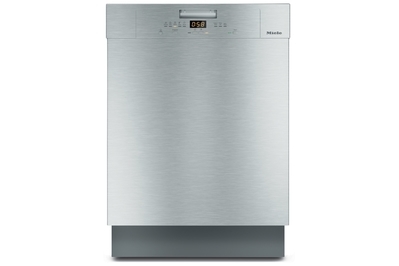
This entry-level Miele model has quiet and effective cycles, an easily navigable control panel, and powerful cleaning ability. Miele is known for its reliability and durability.
Upgrade pick
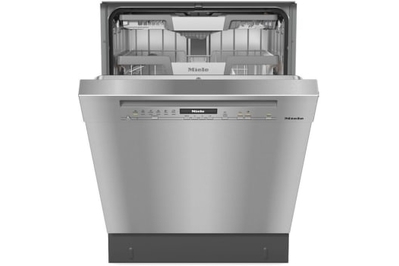
This ultra-quiet model is an exceptional, speedy cleaner with upgraded features. Miele is known for its reliability and durability.
Testing dishwashers requires time and patience (and plenty of peanut butter). Cleaning ability is not the only important factor in our decision; we consider reliability and other features too. But this challenging process reveals the strengths, weaknesses, and quirks of each machine — and helps us confidently choose the best.
This article was edited by Ingrid Skjong and Courtney Schley.
Meet your guide

Andrea Barnes
I research and report on dishwashers, washing machines, dryers, and laundry. This involves touring factories, visiting showrooms, attending trade shows, speaking with appliance-brand representatives, interviewing experts, studying patents and schematics, and reading manuals. I am based in New York City, and I test appliances in our Long Island City office.
Mentioned above
- We’ve stress-tested more than 30 dishwashers, and we recommend the Miele G5008 for its strong cleaning performance, features, and reliability for the price.The Best Dishwashers
- Dishwashers save water, time, and energy. Here are some tips for getting the most out of your machine.How to Use Your Dishwasher Better
Further reading
The Best Dishwasher Detergent
by Andrea Barnes
Dishwasher detergents are better than ever, and after testing over 30 of them, we’ve found that Cascade Free & Clear ActionPacs deliver the best overall clean.Of All the ‘Sustainable’ Dishwasher Pods We Tested, These Really Work
by Andrea Barnes
Dropps UltraWash Plus biobased dishwasher detergent pods claim to give big-brand detergents a run for their money. We put them to the test.
No Dishwasher? A Portable or Countertop Option Could Help.
by Evan Dent
The GE GPT series portable dishwashers clean well and are simple to use. If a countertop dishwasher is a fit, get the Loch Capsule.How I Came to Love the Dusty Powdered Dishwasher Detergent of My Childhood
by Annemarie Conte
Inexpensive doesn’t necessarily mean bad. Cascade Complete Powder costs just pennies per load and is the best powdered dishwasher detergent we’ve tested.


